Your simulations help your engineers compare options and verify designs. Engineering data science and AI models can make recurring design and validation workflows faster, leaving you with more time to improve the product. We help you turn your product expertise and data into useful engineering tools, every step of the way.
It starts with understanding your product, your constraints and what would actually make a difference for your team.
Free introductory call. NDA welcome.
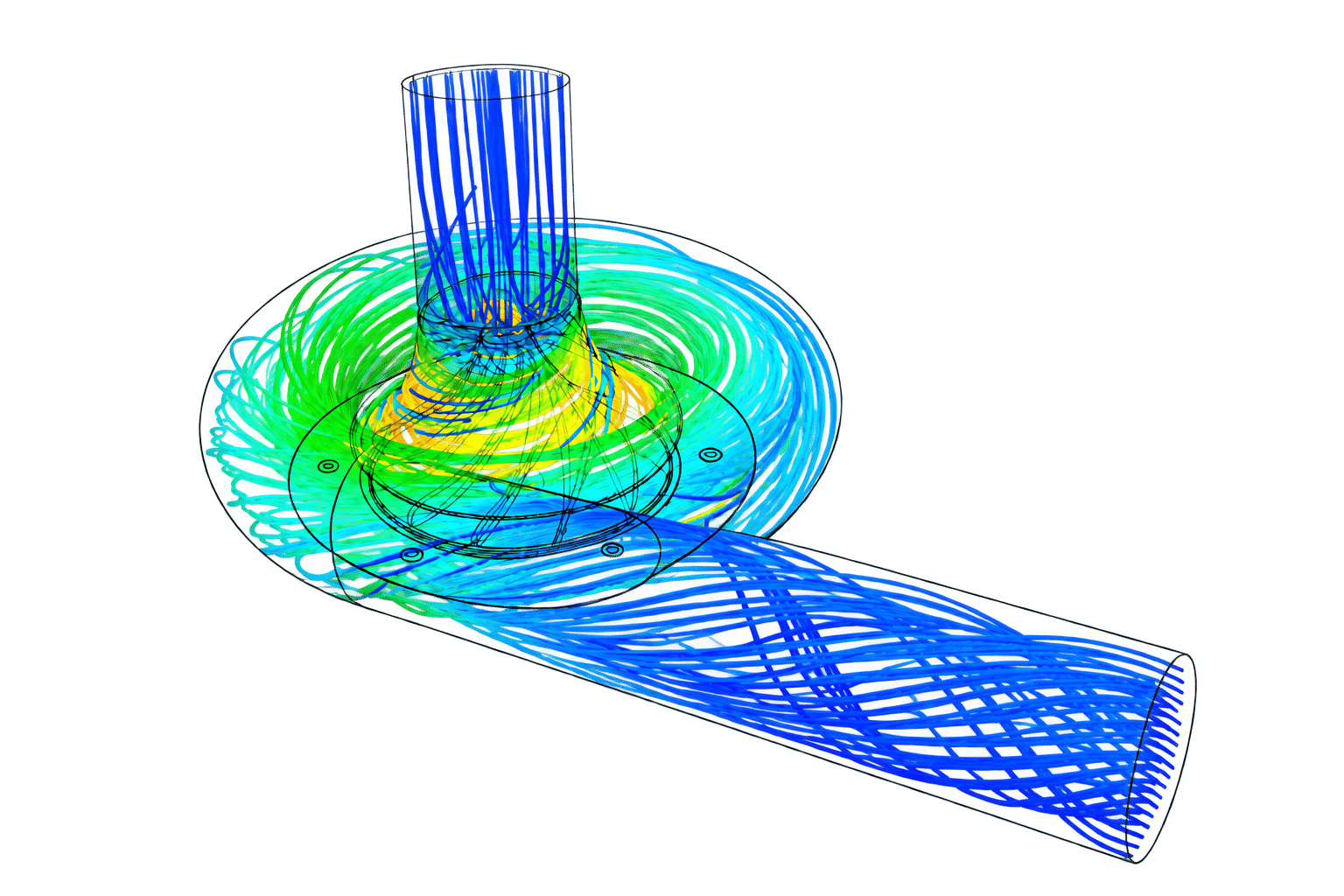
Custom engineering tools require a clear business case. We assess existing tools and engineering methods first, then work towards the smallest solution that creates value. Each stage has an agreed deliverable; further development follows when the expected benefit justifies the cost.
Tell us what you are developing, where your workflow slows down and what you have already tried. We discuss the decisions you need to make, the outputs that would help and how often faster solution forecasts would make a real difference.
We take the time to understand your application. This first conversation helps establish whether the potential benefit warrants a closer assessment. You can walk us through existing simulations, data or models that may or may not work. We are here to help solve your problem – or support your project.
In a scoped assessment, we analyse the available data, identify useful patterns and gaps, and evaluate which approaches fit the task. Existing tools, established engineering methods and suitable AI models are considered alongside custom development.
We assess the results and accuracy that appear achievable, the data required, and the likely effort and cost of development, validation and implementation. These estimates are compared with the expected benefit to your workflow.
The recommendation may be to proceed, narrow the task, collect specific additional data or stop. The findings remain useful even when further model development is not justified.
Your outcome: Data findings, a proposed project scope, cost–benefit ranges, key uncertainties and a clear recommendation.
We begin with a narrowly defined task, selected outputs and a controlled application range. A reliable design comparison or a few performance indicators may provide the feedback your engineers need.
Before development, we agree acceptance criteria covering prediction accuracy, speed and practical usefulness. We then evaluate the model against suitable reference results and document what it can support, where its limits lie and when further simulation is needed.
Once it meets the agreed criteria, this model can already support a real engineering task. It can remain the finished solution: greater complexity or broader generalisation is an optional next step.
Your outcome: A model evaluated against agreed requirements, with documented performance, application limits and guidance for its intended use.
Where integration adds value, we connect the proven model to your data, tools and everyday engineering workflow. Handover requirements—including access, ownership and the ability to maintain or adapt the solution—are agreed from the outset. Documentation, training and support are planned around your team’s needs.
Additional parameters, outputs or product families are treated as separate extensions. Each needs its own assessment of benefit, data requirements, development effort and validation.
Your outcome: A solution fitted to your workflow, with a clear handover and extensions justified by their expected value.
Your existing product already performs well. Manufacturing methods, available space and operating requirements constrain the changes that are worth exploring. A model can focus on the relevant variations within that product family.
A geometrically scaled rotor family spanning, for example, 200–1,000 mm in diameter can share similar flow patterns when the relevant physical conditions are comparable. Engineering relationships help us use what those designs have in common.
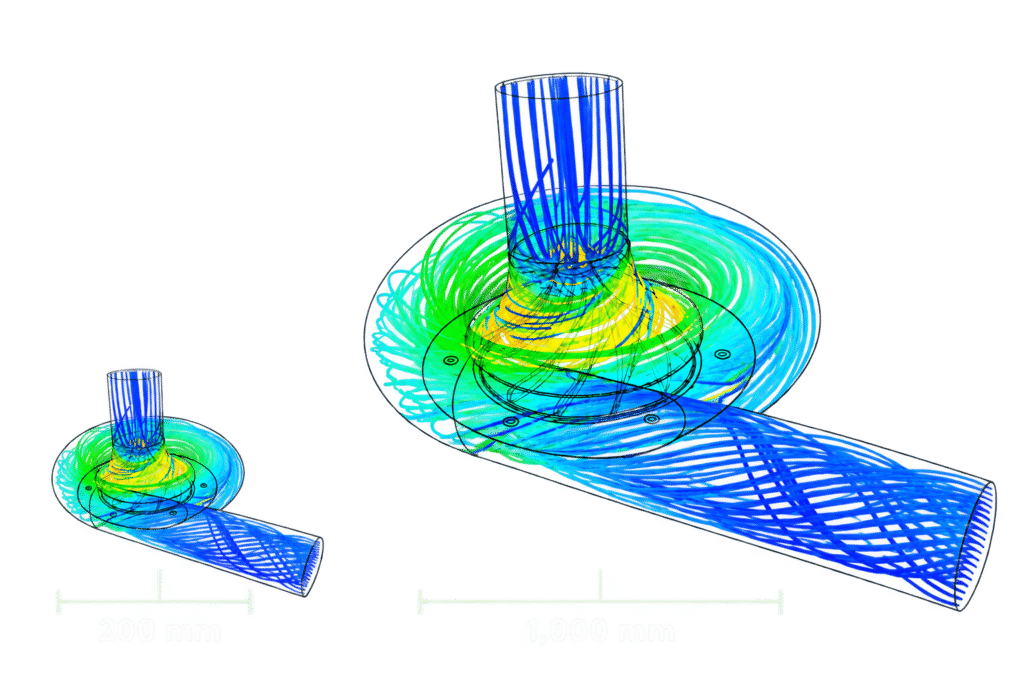
For a tightly defined scaling application, a useful model may be developed from as few as two carefully selected simulation cases, depending on the accuracy required. We establish separately what checks are needed to validate its predictions for the intended use.
What can limitations of such a model be? Changing the manufacturing method from formed sheet metal to injection moulding introduces design possibilities and constraints outside of the trained scope. Extrapolation is possible but has it’s limits. Most likely the model would need adjustment and further training data.
The question is usually not if you have enough data, but how specific a model can be for your engineering task needs. We help you establish that before committing to a larger development project.
Our consulting is grounded in developing and evaluating engineering models ourselves. Our experience combines CFD, FEA and AI model development with NAFEMS training and applied research supported by ZIM and Invest BW.
Whether you are exploring an application, improving an existing model or preparing a full implementation, we start from where your team is today. That can mean a in-house course with consulting session for you to evaluate your position.
Bring your questions, your challenges and whatever work you already have. Let’s explore where we can help your team move forward.
Start a conversation. We can sign an NDA beforehand. Any project work is quoted and agreed before it begins.